What is the ceramic particle production line used for
Release time:2025-06-10
Views:
Author:admin
The ceramic particle production line is a complete set of automated equipment used for producing ceramic particles (a type of artificial lightweight aggregate). Its core function is to process various raw materials into ceramic particle products with characteristics such as light weight, high strength, insulation, sound insulation, and good adsorpti
The ceramic particle production line is a complete set of automated equipment used for producing ceramic particles (a type of artificial lightweight aggregate). Its core function is to process various raw materials into ceramic particle products with characteristics such as light weight, high strength, insulation, sound insulation, and good adsorption through processes such as crushing, screening, mixing, forming, and roasting. Ceramic particles are widely used in construction, environmental protection, agriculture, horticulture and other fields. The following is a detailed description of their specific uses and production lines:
1、 The main use of ceramic particles
1. Construction field
Concrete aggregate:
Replacing traditional sand and gravel in the preparation of lightweight aggregate concrete, reducing the self weight of buildings, improving seismic performance, and enhancing insulation and sound insulation effects, it is commonly used in high-rise buildings, bridges, tunnels, etc.
Wall material:
Produce ceramic blocks, wall panels, etc. for non load bearing walls, reduce structural loads, and improve construction efficiency.
Roof insulation layer:
Installed on the roof, it has both insulation and drainage functions, reducing building energy consumption.
2. Environmental protection field
Wastewater treatment:
As a biological filter material used in aeration tanks and filters of sewage treatment plants, it provides attachment carriers for microorganisms and enhances water purification efficiency (such as removing COD, ammonia nitrogen, etc.).
Landfill Cover Layer:
By utilizing the breathability and stability of ceramic particles as cover materials for landfills, the diffusion of odors and rainwater infiltration can be suppressed.
Industrial waste disposal:
Using industrial waste residue (such as fly ash, coal gangue, slag, etc.) as raw materials to produce ceramic particles, realizing the resource utilization of waste and reducing environmental pollution.
3. Agriculture and Horticulture
Soilless cultivation substrate:
Ceramic particles have abundant pores, water retention and breathability, and can replace soil for hydroponics and substrate cultivation (such as vegetable, flower, and seedling planting), especially suitable for greenhouse and home gardening.
Improvement of fish pond sediment:
Located at the bottom of the fish pond, it adsorbs impurities, regulates water quality, and provides a habitat for aquatic organisms.
Livestock and poultry breeding bedding:
It has moisture absorption and antibacterial properties, and can be used as a breeding mat for poultry and livestock, improving the breeding environment.
4. Other uses
Thermal insulation materials:
Used as insulation layer for thermal pipelines, cold storage, and energy-saving buildings to reduce thermal conductivity efficiency.
Sound absorbing material:
Fill in walls or ceilings to absorb sound waves and reduce noise propagation.
Refractory materials:
High alumina ceramic particles can be used as refractory lining materials for high-temperature kilns, with good high-temperature resistance.
2、 The core process and equipment of ceramic particle production line
1. Raw material processing stage
Types of raw materials:
Common raw materials include clay, shale, fly ash, coal gangue, sludge, construction waste, etc. The process parameters need to be adjusted according to the characteristics of the raw materials.
Key equipment:
Crusher: Crush large raw materials to a particle size of ≤ 30 mm (such as jaw crusher, impact crusher).
Screening machine: Screen out raw materials that meet the particle size requirements (such as vibrating screens).
Blender: Mix raw materials with water and additives (such as binders and foaming agents) evenly, adjust the moisture content to a suitable range (usually 15%~25%).
2. Molding stage
Process objective: To produce uniformly sized spherical or granular bodies from mixed raw materials.
Key equipment:
Ball forming machine: commonly used disc ball forming machine or rotary kiln ball forming machine, which aggregates raw materials into balls (particle size generally 5-20 mm) by rotating and rolling.
Conveyor belt: Transport the blank to the next process.
3. Baking stage
Process core: By high-temperature roasting, the green body undergoes physical and chemical reactions (such as sintering and foaming) to form a porous structure of ceramic particles.
Key equipment:
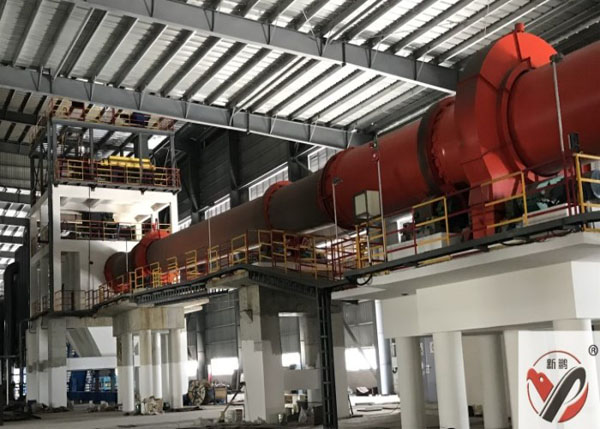
Rotary kiln: a mainstream equipment, the billet moves forward with rotation inside the kiln, passing through the drying zone (200~400 ℃), preheating zone (400~800 ℃), roasting zone (1000~1200 ℃), and cooling zone (<300 ℃) in sequence, with a roasting time of about 20~60 minutes.
Boiling furnace: suitable for light and fine raw materials such as fly ash, achieving rapid foaming through fluidized bed roasting.
Technical points:
Temperature control: It is necessary to accurately regulate the temperature of the roasting zone to avoid undercooking (insufficient strength) or overburning (agglomeration adhesion).
Atmosphere control: Some processes require the introduction of air or inert gas to regulate the oxidation/reduction atmosphere inside the kiln, which affects the performance of ceramic particles.
4. Cooling and screening stage
Cooling equipment:
Use water or air cooling methods (such as cooling cylinders) to lower the ceramic particles to room temperature to prevent high-temperature crushing.
Screening equipment:
Classify according to particle size (such as 3-5 mm, 5-10 mm, 10-15 mm, etc.) and screen out unqualified particles (such as powder, oversized or undersized particles).
5. Storage and packaging stage
Qualified ceramic particles are transported by conveyor belt to the finished product warehouse for storage. They can be bagged, loose or canned according to customer needs for easy transportation and use.
3、 Advantages and characteristics of ceramic particle production line
1. Strong adaptability of raw materials
Various industrial waste residues and waste materials can be used as raw materials to reduce production costs while achieving resource recycling, which is in line with green environmental protection policies.
2. Adjustable product performance
By adjusting the raw material ratio, roasting temperature, and process parameters, ceramic particles with different densities (500~1200 kg/m ³), strengths (3~15 MPa), and applications can be produced to meet diverse needs.
3. High degree of automation
Modern production lines often use PLC control systems to achieve automated operation of processes such as crushing, forming, roasting, cooling, and screening, reducing labor costs and improving production efficiency and stability.
4. Significant economic benefits
The demand for ceramic particles in the market is strong, and their applications in fields such as construction and environmental protection continue to grow;
Utilizing waste residue for production can enjoy policy subsidies (such as tax incentives for comprehensive resource utilization), further enhancing profit margins.
4、 Typical application scenarios and cases
Construction project: A high-rise building uses lightweight aggregate concrete with ceramic particles, which reduces the weight of the walls by 30%, improves insulation performance by 40%, and shortens the construction period by 15%.
Sewage treatment: A municipal sewage treatment plant uses ceramic biofilters, which increase the removal rate of ammonia nitrogen from 60% to 85%, and the service life of the filter material is over 5 years.
Agricultural planting: A certain flower base adopts the ceramic soilless cultivation technology, which increases the survival rate of flowers by 20%, reduces irrigation water consumption by 50%, and increases yield by 30%.
summary
The ceramic particle production line is a key equipment for realizing industrial production of ceramic particles, and its core value lies in transforming cheap raw materials into high value-added products through standardized processes, widely serving fields such as building energy conservation, environmental protection, and modern agriculture. With the development of green building materials and circular economy, the application prospects of ceramic particle production lines will be even broader.
RELATED ARTICLES
-
-
Introduction to the key points of using plate feeder
2025-01-17
-
Key points to understand when using a side cantilever stacker
2024-09-10
-
Do a good job in maintaining the bridge scraper reclaimer
2024-10-26
-
What is the ceramic particle production line used for
2025-06-10
-
Methods to improve the efficiency and quality of belt conveyors
2024-10-08